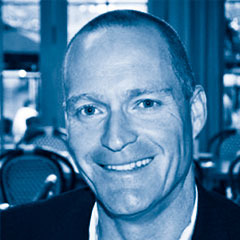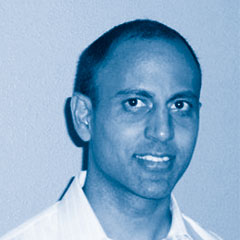




Cool business cards

October 31st, 2008
by andyux

what do you think?

Tags: , ,
Posted in Design | Comments (0)

Michael Pollan Secretary of Agriculture I

October 17th, 2008
by andyux

Bill Moyers sits down with Michael Pollan, Knight Professor of Journalism at UC Berkeley, to discuss what direction the U.S. should pursue in the often-overlooked question of food policy.  Pollan is author of In Defense of Food: An Eater’s Manifesto.

video part I

Sign a petition for Pollan to consider the Secretary of Agriculture position.

and you can visit the website pollanforsecretaryofagriculture.org

Tags: , , ,
Posted in social media | Comments (0)

Michael Pollan Secretary of Agriculture II

October 17th, 2008
by andyux

Bill Moyers sits down with Michael Pollan, Knight Professor of Journalism at UC Berkeley, to discuss what direction the U.S. should pursue in the often-overlooked question of food policy.  Pollan is author of In Defense of Food: An Eater’s Manifesto.

video part II

Sign a petition for Pollan to consider the Secretary of Agriculture position.

and you can visit the website pollanforsecretaryofagriculture.org

Tags: , , ,
Posted in social media | Comments (0)

Neutral Density Filters

October 12th, 2008
by andyux

The main purpose of using neutral density (i.e., ND) filters is to reduce the amount of light that can pass through the lens. As a result, if a shutter speed is kept the same, after adding a neutral density filter, a larger aperture must be used to obtain the same exposure. Similarly, if an aperture is kept the same, after adding a neutral density filter, a slower shutter speed must be used to obtain the same exposure. This can be seen in the following diagram. Note that this diagram was discussed in the Program Mode (950, 990 and 995).

Recall that the thick red line indicates a constant exposure value (i.e., EV). To achieve this “correct” exposure, there are many different aperture-shutter speed combinations. After adding a ND filter, the exposure value is reduced because there is less light passing through the lens. This is shown as a dashed line in the above figure. Thus, if we want to keep the original shutter speed (without using a ND filter), aperture has to be wider; or, if we want to keep the original aperture, shutter speed must be slower.

Different ND filter manufacture many use a different way to indicate the amount of light a ND filter can reduce. There are two typical systems as shown below:

Density 0.1 0.2 0.3 0.4 0.5 0.6 0.7 0.8 0.9 1.0 2.0 3.0 4.0
Reduction
by f-stops
1/3 2/3 1 1 1/3 1 2/3 2 2 1/3 2 2/3 3 3 1/3 6 2/3 10 13 1/3

For example, Tiffen and B+W have 0.3, 0.6 and 0.9 ND filters for reducing one, two and three stops of light. Hoya, on the other hand, uses 2×, 4× and 8× to indicate reducing 1 (i.e. 2=21), 2 (i.e., 4=22), and 3 (i.e., 8=23) stops.

All ND filters are gray in color. The deeper the color, the stronger the effect (i.e., reducing more light). The following shows Nikon’s ND4 (font) and ND8 (rear) filters. From the shadows, it is clear that a ND8 blocks more light than a ND4 does.

Based on this understanding, ND filters help us in at least three situations: (1) reduce the intensity of light; (2) use slower shutter speed; and (3) use larger aperture.

Using Slower Shutter Speed

Reducing the intensity of light means we can either use a slower shutter speed or a larger aperture. A slower shutter speed can cause moving objects blurred (i.e., motion blur) which creates a sense of motion. The following images were taken using the Aperture-Priority Mode. The aperture was set to F2.8, the largest possible aperture, so that shutter speed can be reduced properly. The left image below was taken without a ND filter, and, as you can see, the truck (running about 40 miles) is frozen. Motion blur becomes even more significant if ND8 is used (right image below) which reduces the shutter speed to 1/8 of that used for the left image.

Without ND With ND filter

Using Larger Aperture

Since ND filters reduce the amount of light that can pass through the lens tube, they can be used to open up the aperture while keep the shutter speed the same. Keep in mind that a larger aperture produces a shallower Depth of Field. The following images were all taken with the same shutter speed. Using the ND filter reduces the aperture. Now the subject is well isolated from the background, and it shows a better sense of distance.

Without ND With ND filter
1/160 @ f8 1/160 @ f4
1/125 @ f14 1/125 @ f5.6

Tags: , ,
Posted in Photography | Comments (0)

All of Our Empty Jars

October 8th, 2008
by andyux

I just find this fascinating. It is a video composed of still shots (shot with a camera not a video cam), of long exposure shots. So each shot may be say 10 secs long, yet its captured into a single shot, that could then last forever or a split second. And combined in a carefully arranged sequence to create a story.


All of Our Empty Jars from watergun on Vimeo.

I guess what i like is the distortion of time.

Tags: , , , ,
Posted in Media, Photography, video | Comments (0)

Out on Lake Travis

October 4th, 2008
by andyux
Photos on Flickr

Lake Travis – Wikipedia, the free encyclopedia

Tags: , ,
Posted in Blogs | Comments (0)

The Great Schlep

October 2nd, 2008
by andyux

Sarah Silverman in “The Great Schlep”


The Great Schlep from The Great Schlep on Vimeo.

Tags: , , , ,
Posted in Design | Comments (0)

Twitter Weekly Updates for 2008-09-28

September 28th, 2008
by andyux
twitter

twitter

  • Became a merchant services provider, need to accept credit cards online/shopping carts, retail, virtual terminal, etc. #
  • more on this soon.

Merchant account

Authorize.Net

Tags:
Posted in social media | Comments (0)

Open White Spaces for Everyone

September 22nd, 2008
by andyux

A fight for universal Internet access is being waged in Washington over spectrum white spaces — empty frequencies between television channels that have the potential to connect millions to the information superhighway. The powerful corporate lobby would rather hoard this spectrum for themselves.

The Federal Communications Commission now faces a critical choice: Open this spectrum to bring more Americans online or side with the lobbyists and block innovation.

Fill out the form below and we will send your personalized message to your Senators and Representative.

Unless we speak out to our congressional representatives, large telephone and cable companies will continue to deny Internet access to millions who cannot access the information superhighway.

Please visit the URL below to check out what’s at stake and send a loud message directly to Congress:
https://secure.freepress.net/site/Advocacy?id=273

Tags: ,
Posted in IT, Media, social media | Comments (0)

Twitter Weekly Updates for 2008-09-21

September 21st, 2008
by andyux
twitter

twitter

  • linking all social media #
  • 60F in TX in September, loving it #
  • glad the weekend is over, need to rest! #

NonProfits Benefit from Social Media

Social Graph Platform Wars

Tags: , , , , , , ,
Posted in social media | Comments (0)